
News
From commitments to action: 5 priorities UNEP-WCMC is helping advance at COP17
Story | Oct 2026
World takes stock of progress and needs to accelerate action as crucial COP17 meeting gets going in Armenia.
The city of Yerevan in Armenia has witnessed nearly 3,000 years of history. This month adds another chapter to that record, as the international community descends on the capital, seeking to strengthen urgent action to address the nature crisis.
Delegates are gathering for the 2026 UN Biodiversity Conference (CBD COP17). The event marks the halfway point between the adoption of the Kunming-Montreal Global Biodiversity Framework (KMGBF) and the 2030 deadline for its targets. A major report, the State of Biodiversity Action, has concluded that whilst the KMGBF has generated unprecedented global engagement the world is not on track to meet the 2030 targets or mission, and so urgent and scaled-up action is now needed to deliver on these ambitions.
The Conference agenda is long and discussions complex, but there are no shortcuts to halting and reversing biodiversity loss. Urgent action is needed across government and society.
Here we highlight five key items where experts from UNEP-WCMC will be working at the conference to support Parties to the Convention and other partners to drive urgent implementation of the KMGBF.
1. Monitoring progress to inform accelerated action
What to watch: Matching decision-making with the best available data and evidence to deliver effective action
Countries are taking action for nature, but it is insufficient, with gaps in data, knowledge and technical capacity meaning that the picture of progress is incomplete. This is a major conclusion of the first global report on collective progress under the KMGBF, the State of Biodiversity Action. Without greater insight at the national level the world cannot track collective progress at the global scale.
In Yerevan, UNEP-WCMC is focused on linking data, evidence and decision-making. Our experts have decades of experience supporting the strengthening of national monitoring systems, and the development of the global monitoring system that underpins the State of Biodiversity Action and progress towards the KMGBF. UNEP-WCMC coordinates the National Monitoring Support Initiative, a country and region-led global initiative to strengthen the capacity of national institutions to monitor, review and report on the implementation of national biodiversity actions. UNEP-WCMC also supports countries with national ecosystem assessments that bring evidence together to inform action. Our recently released Ecosystem Integrity Index is a leading approach for comprehensively assessing the condition of the world’s terrestrial ecosystems. A KMGBF indicator, it enables government and non-state actors to set, measure and report on ambitions to maintain and increase ecosystem integrity.
We provide essential digital infrastructure that strengthens national reporting, including maintaining the World Database on Protected and Conserved Areas (WDPCA), the most comprehensive and authoritative tracker of progress on Target 3 of the KMGBF. The UN Biodiversity Lab (UNBL) supports governments to identify where to protect, manage and restore ecosystems; to direct limited resources and investment; and to prioritize action. Providing state-of-the-art data and analytical tools through a free, open-access platform, UNBL empowers its users to make data-driven plans and decisions for nature.
2. Biodiversity finance: From pledges to investments
What to watch: Parties moving from strategy to delivery to close the $700 billion gap between pledges and reality.
COP17 will have a critical focus on “resource mobilization” – ensuring finances are made available to deliver on actions for nature, and to reduce harmful financial and fiscal flows. Under the KMGBF Parties agreed to mobilize at least $200 billion a year for biodiversity and to reduce harmful subsidies by at least $500 billion a year. Currently-available finance falls far short of this and for every dollar invested in protecting nature, $30 is spent destroying it.
With finance a pillar of the Armenian COP17 Presidency’s agenda, COP17 must secure firmer commitments to mobilize public finance, alongside international, private sector and other sources of funding.
UNEP-WCMC works with international financial institutions and partners to mobilize finance and realign financial flows. Under our Nature Transitions Support Programme (NTSP), we engage with governments to develop nationally-led action plans aimed at shaping and enabling sustainable and inclusive economic transformations. UNEP-WCMC supports national governments to revise, deliver and monitor implementation of their National Biodiversity Strategy and Action Plans (NBSAPs). As part of this, we also work with partners to mobilize private finance for the delivery of NBSAPs.
3. Mainstream nature at the heart of every sector
What to watch: Parties take forward meaningful action across government and society to tackle the underlying drivers of biodiversity loss
Solving the nature crisis means that we must address the underlying drivers of biodiversity loss. But one of the key messages of the State of Biodiversity Action is that the world is not doing enough to tackle these. Recognizing the scale of the task, for years UNEP-WCMC has worked across government ministries and with businesses to understand and reduce their impact on nature.
We work with businesses to support the uptake of science, knowledge and best practice through Proteus, a unique partnership that brings industry-leading private sector organizations together with UNEP-WCMC’s technical experts to collectively advance biodiversity action. We work with partners to strengthen business capacity to assess, report and act on their nature-related dependencies, impacts, risks and opportunities through our Integrated Biodiversity Assessment Tool (IBAT) and Exploring Natural Capital Opportunities, Risks and Exposure (ENCORE) tools.
4. Inclusive environmental governance
What to watch: How Indigenous Peoples and local communities are engaged, and ambitions for gender-inclusive processes deliver real influence over outcomes.
The last UN Biodiversity Conference in 2024 established a new subsidiary body under the Convention: the Subsidiary Body on Article 8(j) and Other Provisions of the Convention Related to Indigenous Peoples and Local Communities (SB8J), which held its inaugural meeting last year. The move gave a formal role to Indigenous Peoples and local communities within the Convention, setting the stage for a deeper and more engaged approach to recognizing and enabling their critical role in the conservation and sustainable use of biodiversity. Fully operationalizing the SB8J will be key focus of COP17 – one that our team, who co-hosted several workshops to advance development of Traditional Knowledge Indicators, and who work to support the recognition of Indigenous and Traditional Territories around the world will be closely supporting.
We will also be providing support to countries as they work to ensure that biodiversity action is inclusive of women and girls. In collaboration with Parties, observers and the major groups, UNEP-WCMC and Women4Biodiversity have co-developed a methodology to track progress on gender action as countries deliver on their national biodiversity strategies and action plans.
5. Stronger together: Delivering synergies between environmental agreements
What to watch: COP17 taking practical steps to achieve more from delivering interconnected conventions together
There are hundreds of multilateral environmental agreements (MEAs). The proliferation of these agreements over recent decades risks that countries duplicate work and spread human and financial resources thinly. Combining strategic, programmatic and administrative efforts across MEAs provides huge opportunities for achieving more in each of them. UNEP-WCMC works to support action that is coherent, coordinated and achieves greater impact, for example through our close engagement in the Bern Process, which brings together Parties from across biodiversity-related, chemical, climate and land conventions to advance joint delivery on the KMGBF.
UNEP-WCMC has also developed the Online Reporting System, working with multiple MEAs to support Parties and secretariats to manage, submit and track national reporting through a common platform. Many of UNEP-WCMC's datasets also serve multiple conventions, such as and Species+ and the World Database on Protected and Conserved Areas.
The world urgently needs accelerated action. From monitoring and finance to inclusion in implementation, Yerevan is where governments take stock, and where ambition needs to be converted into accelerated, evidence-based action at the national level. UNEP-WCMC is contributing science, tools, expertise and insight to support Parties at the 2026 UN Biodiversity Conference in making and taking decisions that will shape – and accelerate – these next four years of action.
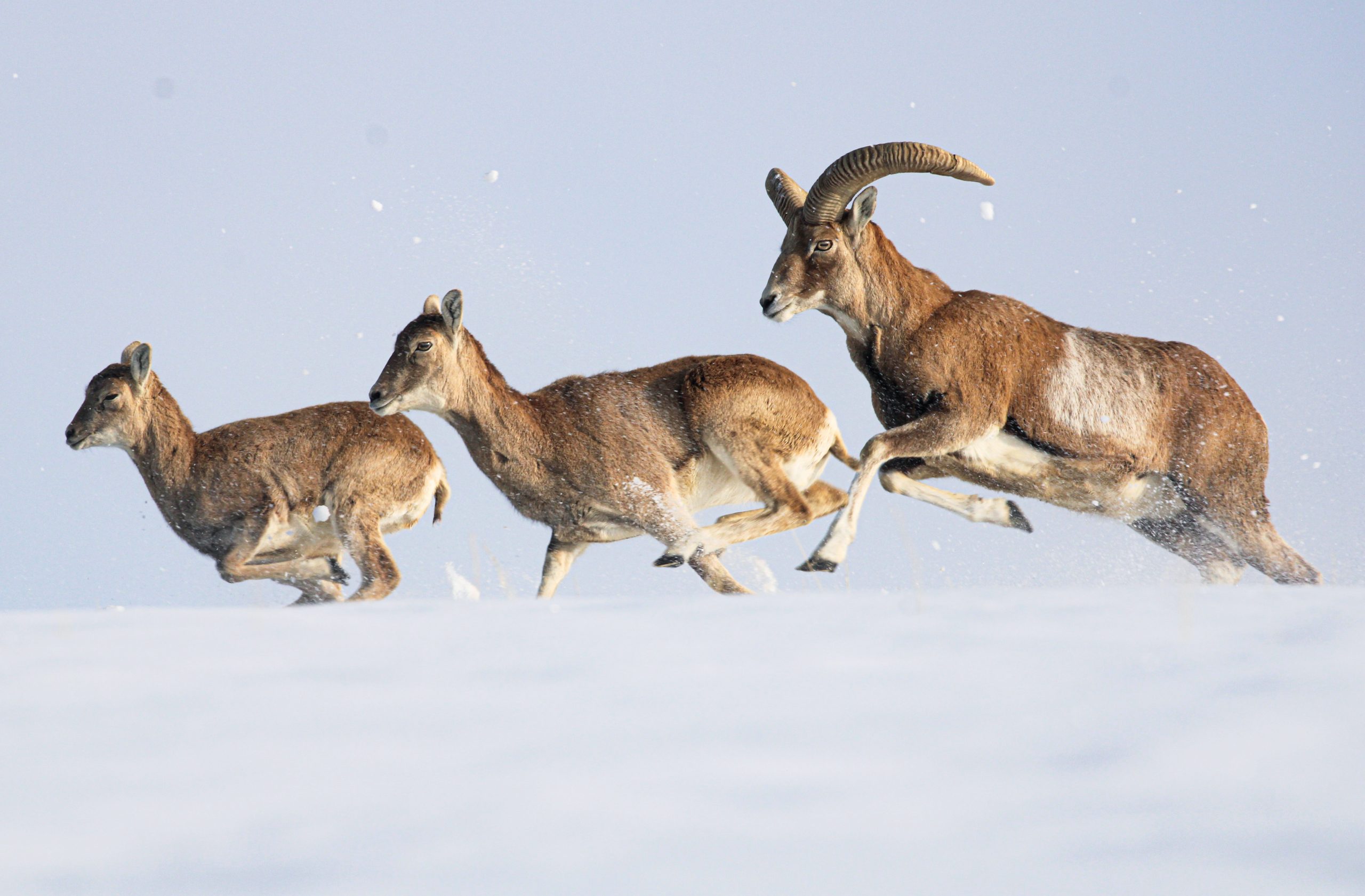
Main image: Armenian mouflons, wild sheep found in the mountainous steppe and grassland habitats of the southern Caucasus region. With only hundreds remaining in the wild, the species is Near Threatened. (Image: Adobe #1307576838)
Have a query?
Contact us
[email protected]